
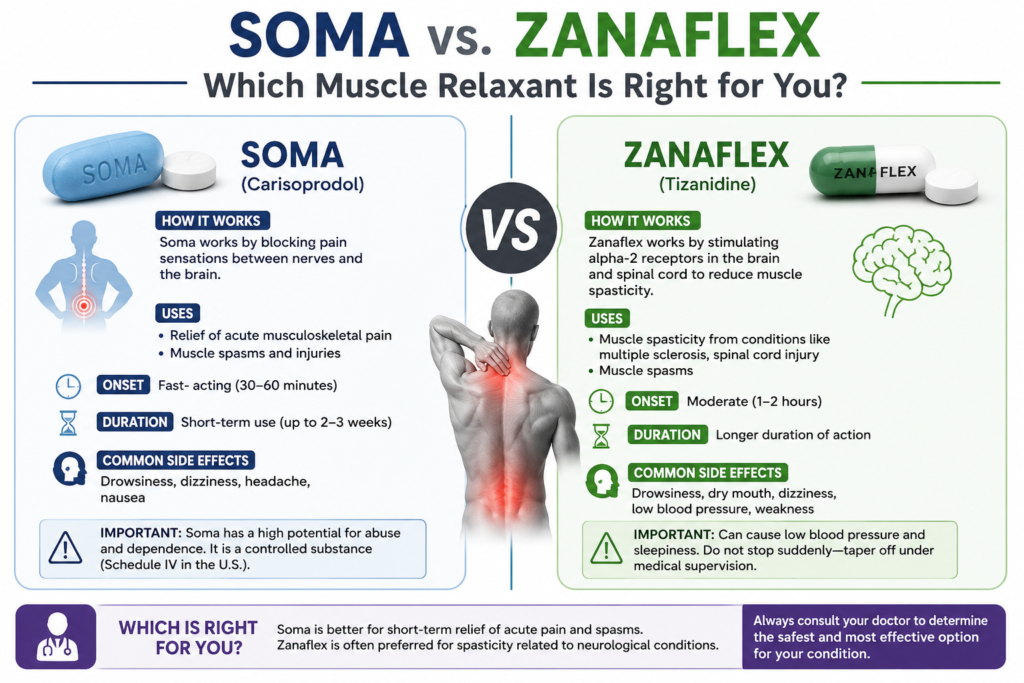
Introduction: Soma vs. Zanaflex – Which Muscle Relaxant Is Right for You?
Muscle spasms and spasticity can significantly impact quality of life, whether they stem from an acute injury, a chronic condition like fibromyalgia, or a neurological disorder. When conservative treatments like rest and physical therapy aren’t enough, doctors often turn to prescription muscle relaxants. Two of the most commonly prescribed options are Soma (carisoprodol) and Zanaflex (tizanidine). While both are used to relieve muscle-related discomfort, they differ significantly in their mechanisms, approved uses, side effect profiles, and safety considerations. This comprehensive guide compares Soma and Zanaflex to help you understand your options. For more information on prescription medications for pain and spasticity, visit our website.
Understanding Muscle Spasms and Spasticity
Before diving into the medications, it’s helpful to understand what they are designed to treat.
- Muscle spasms are sudden, involuntary contractions of a muscle or group of muscles. They are often painful and can be caused by overuse, injury, dehydration, or underlying medical conditions.
- Spasticity, on the other hand, is a condition characterized by abnormal muscle tightness, stiffness, and involuntary jerks or spasms. It is typically caused by damage to the part of the brain or spinal cord that controls voluntary movement, as seen in conditions like multiple sclerosis, cerebral palsy, or spinal cord injury.
The distinction is important because Soma and Zanaflex are approved for different aspects of muscle dysfunction.
Soma (Carisoprodol): A Short-Term Solution for Acute Pain
Soma is a brand name for the medication carisoprodol. It has been approved by the FDA since 1959 and is classified as a Schedule IV controlled substance, indicating a low potential for abuse relative to other substances. It is also available as a generic medication.
How Soma Works
While the exact mechanism isn’t fully understood, Soma is believed to exert its muscle-relaxing effects by altering nerve activity in the brain and spinal cord. It’s important to note that some experts describe Soma as being more of a sedative or tranquilizer than a true muscle relaxant, as it may produce its effects through general central nervous system depression.
Primary Uses and Duration
Carisoprodol is FDA-approved for the relief of discomfort associated with acute, painful musculoskeletal conditions in adults. It is specifically approved for short-term use only—generally for up to 2 to 3 weeks. It is not intended for long-term use, which can increase the risk of abuse, dependence, and tolerance. Soma is typically prescribed for use with rest and physical therapy to treat injuries and other painful musculoskeletal conditions. It is not recommended for use in people under age 16 or over age 65.
Dosage and Onset
Soma is available in 250 mg and 350 mg tablets. The typical dosage is one tablet taken three times a day and at bedtime. It works relatively quickly, with effects generally felt within 30 minutes.
Zanaflex (Tizanidine): Targeting Spasticity and Chronic Spasms
Zanaflex is a brand name for the medication tizanidine. It was FDA-approved more recently, in 1996, and is available as both a brand-name and generic medication. Importantly, Zanaflex is not a controlled substance.
How Zanaflex Works
Zanaflex acts as a centrally-acting alpha-2 adrenergic agonist. By reducing the release of excitatory neurotransmitters in the spinal cord, it effectively decreases muscle spasticity and reduces the frequency of muscle spasms. This mechanism targets the neurological signals causing the muscle overactivity, rather than just sedating the patient.
Primary Uses and Duration
Tizanidine is FDA-approved to treat stiff, rigid muscles caused by spasticity. It is used to temporarily relax muscle tone and can be beneficial for conditions like multiple sclerosis or spinal cord injury. Unlike Soma, Zanaflex is not primarily for acute pain but for managing chronic spasticity. It can be used on an as-needed basis, up to three times a day.
Dosage and Onset
Zanaflex is available in 2 mg, 4 mg, and 6 mg tablets and capsules. The capsule form can even be opened and the contents sprinkled on applesauce for patients who have difficulty swallowing. It works quickly, typically within 1 to 2 hours. Dosing is individualized, and it’s generally taken as needed, but it can cause withdrawal symptoms if the dose is lowered or stopped suddenly.
Head-to-Head Comparison: Effectiveness and Ratings
One way to gauge patient satisfaction is through drug rating sites. According to Drugs.com user reviews, Soma has an average rating of 9.1 out of 10 from 203 ratings, with 91% of users reporting a positive effect. Zanaflex, in comparison, has a rating of 7.6 out of 10 from 116 ratings, with 67% of users reporting a positive effect. It is important to note that these ratings reflect individual experiences and may not predict how a medication will work for you.
Potential Side Effects: What to Watch For
Both medications can cause side effects, but their profiles differ.
Common Side Effects of Soma
The most commonly reported side effects of Soma include drowsiness (13-17%), dizziness (7-8%), and headache (3-5%). Because Soma is a sedative-like medication, it can cause extreme sleepiness and trouble with concentration. It also carries significant risks, including the potential for misuse, dependence, and withdrawal, and in rare cases, seizures.
Common Side Effects of Zanaflex
Common side effects of Zanaflex include dry mouth, sleepiness, dizziness, constipation, and low blood pressure. It can also cause hallucinations in some cases. It’s important to be aware that Zanaflex interacts with many medications, including birth control pills and opioids, which can increase its sedative effects.
A Closer Look at Long-Term Risks
A long-term study comparing Soma and Zanaflex users found that while both drugs were associated with chronic kidney disease and renal failure over one year of use, the incidence appeared to be lower with Zanaflex. Soma was more frequently linked to drug dependence, hypertension, and migraines in the long term. These findings highlight the importance of using these medications under close medical supervision, especially for extended periods.
Other Muscle Relaxant Options
While Soma and Zanaflex are frequently prescribed, they are not the only options. Other muscle relaxants include Flexeril (cyclobenzaprine). Each medication has its own side effect profile and approved uses.
Comparison Table: Soma vs. Zanaflex
| Feature | Soma (Carisoprodol) | Zanaflex (Tizanidine) |
|---|---|---|
| Primary Use | Short-term relief of acute musculoskeletal pain | Management of spasticity and chronic spasms |
| Mechanism of Action | Central nervous system depressant, acts as a sedative/tranquilizer | Central alpha-2 agonist, reduces excitatory neurotransmitters in spinal cord |
| Controlled Substance | Schedule IV (low potential for abuse) | Not a controlled substance |
| Approved Treatment Duration | Short-term, up to 2-3 weeks | Can be used as needed for chronic conditions |
| Onset of Action | ~30 minutes | 1-2 hours |
| Common Side Effects | Drowsiness, dizziness, headache | Dry mouth, sleepiness, dizziness, low blood pressure |
| Drug Interactions | 375 drugs known to interact | 656 drugs known to interact |
| Approval Date | April 9, 1959 | November 27, 1996 |
Choosing the Right Muscle Relaxant
The choice between Soma and Zanaflex depends entirely on the nature of the muscle condition being treated.
- If you have an acute muscle injury like a strain or sprain, your doctor may prescribe Soma for short-term relief, usually for no more than 2 to 3 weeks, to help you through the initial painful phase while you heal. It works quickly, but its sedative properties and potential for dependence make it unsuitable for long-term use.
- If you have a chronic condition characterized by spasticity, such as multiple sclerosis or a spinal cord injury, Zanaflex is a more appropriate choice. It directly targets the neurological cause of spasticity, helping to manage muscle tightness on a longer-term, as-needed basis.
It is crucial to discuss your medical history, other medications, and the specific nature of your symptoms with your healthcare provider.
Frequently Asked Questions
🔗 Explore More Resources
Visit Justin Healthcare for more information on:
📚 External Resources
For authoritative information on muscle relaxants and pain management, visit: