
Introduction
Pain is one of the most common reasons patients seek medical care, affecting quality of life, sleep, and daily function . When over-the-counter pain relievers like ibuprofen or acetaminophen are no longer sufficient, doctors may prescribe opioid analgesics to manage moderate to severe pain.
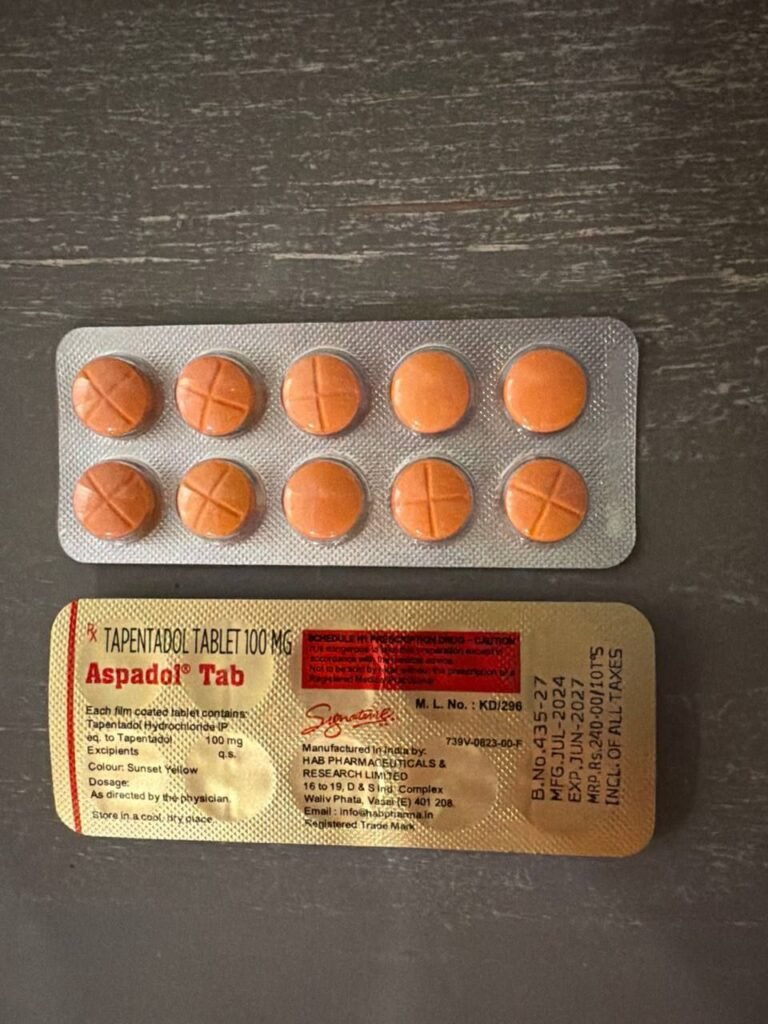
Aspadol 100mg (Tapentadol 100mg) is a prescription opioid that has gained attention for its unique dual mechanism of action. But how does it compare to traditional opioids like Tramadol, Oxycodone, and Morphine? Which one is the right choice for your specific pain condition?
This comprehensive comparison guide will help you understand the differences between Aspadol and other common pain medications, including their efficacy, safety profiles, side effects, and ideal use cases.
⚠️ Medical Disclaimer: This article is for informational purposes only and does not constitute medical advice. Opioids are prescription-only controlled substances with risks of dependence, respiratory depression, and overdose. Always consult a qualified healthcare professional before starting, changing, or discontinuing any pain medication.
Understanding Aspadol 100mg (Tapentadol 100mg)
Before comparing Aspadol to other opioids, it is essential to understand what makes this medication unique.
What Is Aspadol?
Aspadol is the brand name for Tapentadol, a centrally-acting opioid analgesic available in 100mg immediate-release tablets . It is indicated for the management of moderate to severe acute pain in adults when other treatments fail to provide adequate relief .
The Dual Mechanism of Action
What sets Tapentadol apart from traditional opioids is its dual mechanism of action :
| Mechanism | Function |
|---|---|
| Mu-Opioid Receptor Agonism | Reduces the perception of pain by binding to opioid receptors in the central nervous system |
| Norepinephrine Reuptake Inhibition (NRI) | Enhances the body’s natural pain inhibition pathways, particularly effective for neuropathic pain |
This dual action allows Tapentadol to provide effective pain relief at lower opioid receptor occupancy compared to traditional opioids, potentially reducing certain opioid-related side effects .
According to a 2024 review published in Cureus, tapentadol “effectively addresses both nociceptive and neuropathic pain, offering a more favorable efficacy-safety profile compared to traditional opioids such as tramadol” .
Comparison #1: Aspadol 100mg vs. Tramadol
Tramadol is often considered Tapentadol’s predecessor, and the two are frequently compared. However, significant differences exist in potency, mechanism, and safety.
Mechanism Comparison
| Feature | Aspadol (Tapentadol) | Tramadol |
|---|---|---|
| Primary Mechanism | Mu-opioid agonist + Norepinephrine reuptake inhibitor | Weak mu-opioid agonist + Serotonin/norepinephrine reuptake inhibition |
| Potency | Higher | Lower |
| Serotonin Effect | Very weak serotonin reuptake inhibition | Strong serotonin reuptake inhibition |
According to the MSD Manuals, Tramadol “inhibits serotonin reuptake and may cause serotonin syndrome in combination with other medications,” while Tapentadol has “very weak serotonin reuptake inhibition” .
Efficacy and Safety
A 2023 review published in Drug Design, Development and Therapy concluded that “compared to tramadol and other opioids, tapentadol is associated with fewer adverse effects than tramadol” .
Key Differences:
- Potency: Tapentadol is significantly more potent than tramadol, making it more effective for severe pain
- Seizure Risk: Tapentadol has a lower seizure threshold concern compared to tramadol
- Serotonin Syndrome: Lower risk with Tapentadol due to minimal serotonin activity
- Neuropathic Pain: Both address neuropathic components, but Tapentadol’s NRI effect is more targeted
Which One Is Right for You?
| Condition | Preferred Option |
|---|---|
| Moderate acute pain | Tramadol may suffice |
| Severe acute pain requiring higher potency | Aspadol 100mg |
| Patients on SSRIs/SNRIs (antidepressants) | Aspadol (lower serotonin interaction risk) |
| Neuropathic pain components | Aspadol (stronger NRI effect) |
📚 External Source: MSD Manuals – Opioid Analgesics Comparison Table provides authoritative comparative data on all opioid analgesics.
Comparison #2: Aspadol 100mg vs. Oxycodone
Oxycodone is one of the most commonly prescribed strong opioids for severe pain. How does Aspadol compare to this established standard?
Mechanism and Potency
| Feature | Aspadol (Tapentadol) | Oxycodone |
|---|---|---|
| Mechanism | Dual (opioid + NRI) | Single (mu-opioid agonist) |
| Potency | Moderate-high | High |
| Indications | Acute pain, neuropathic pain | Acute pain, chronic pain, cancer pain |
Side Effect Profile
One of the most significant advantages of Tapentadol over traditional opioids like Oxycodone is its improved gastrointestinal tolerability.
A comparative analysis published in Die Pharmazie noted that tapentadol offers “a better safety profile in terms of a lower potential for drug-drug interactions and a lower potential for causing adverse events” .
Common Side Effect Comparison:
| Side Effect | Aspadol (Tapentadol) | Oxycodone |
|---|---|---|
| Constipation | Less frequent | More frequent |
| Nausea | Comparable | Comparable |
| Respiratory Depression | Present (lower incidence) | Present |
| Sedation | Moderate | Moderate to high |
When Is Aspadol Preferred Over Oxycodone?
- Neuropathic pain components: Tapentadol’s NRI mechanism provides added benefit for nerve-related pain
- Patients sensitive to constipation: Tapentadol is associated with lower rates of opioid-induced constipation
- Mixed pain syndromes: When both nociceptive and neuropathic pain are present
When Is Oxycodone Preferred?
- Severe chronic pain requiring high-potency opioid therapy
- Cancer pain (morphine and oxycodone are considered first-line strong opioids for cancer pain)
- Patients who have failed Tapentadol therapy
📚 External Source: The PROSPERO systematic review on cancer pain management identifies morphine, oxycodone, and hydromorphone as first-choice strong opioids for cancer pain.
Comparison #3: Aspadol 100mg vs. Morphine
Morphine is the “gold standard” against which all other opioids are compared. How does Aspadol measure up?
Historical Context
Morphine has been used for centuries and remains the standard of comparison for opioid analgesics . Tapentadol, approved by the FDA in 2008, is a newer alternative .
| Feature | Aspadol (Tapentadol) | Morphine |
|---|---|---|
| Mechanism | Dual (opioid + NRI) | Single (mu-opioid agonist) |
| Histamine Release | Minimal | Triggers histamine release (can cause itching and hypotension) |
| Metabolite Accumulation | Minimal | Active metabolites accumulate in renal failure |
| Renal Safety | Safer in renal impairment | Caution required |
Renal Impairment Considerations
Morphine has active metabolites (morphine-6-glucuronide and morphine-3-glucuronide) that accumulate in patients with kidney disease, potentially causing respiratory depression and CNS excitation . Tapentadol does not have this same accumulation risk, making it a safer option for patients with renal impairment.
Which One Is Right for You?
| Patient Profile | Preferred Option |
|---|---|
| Severe acute pain, no renal issues | Either (morphine is standard) |
| Renal impairment | Aspadol (safer metabolite profile) |
| Post-operative pain | Both effective; multimodal approach recommended |
| Patients experiencing morphine-induced itching | Aspadol (minimal histamine release) |
Comparison #4: Aspadol 100mg vs. Other Opioid Alternatives
Aspadol vs. Buprenorphine
Buprenorphine is a partial opioid agonist with a unique safety profile. A 2025 meta-analysis published in Regional Anesthesia & Pain Medicine found that buprenorphine demonstrated “superior efficacy in managing acute postoperative pain compared with full agonist opioids, with a favorable safety profile and longer duration of action” .
| Feature | Aspadol (Tapentadol) | Buprenorphine |
|---|---|---|
| Type | Full agonist | Partial agonist |
| Ceiling Effect | No | Yes (analgesic ceiling) |
| Duration | 4-6 hours | Up to 8.5 hours |
| Reversal | Standard naloxone dose | Higher naloxone doses may be required |
Aspadol vs. Fentanyl
Fentanyl is a potent, short-acting opioid often used in hospital settings.
| Feature | Aspadol (Tapentadol) | Fentanyl |
|---|---|---|
| Route | Oral | IV, transdermal, transmucosal |
| Onset | 30-60 minutes | Rapid (IV: seconds) |
| Use Setting | Outpatient/home | Hospital/procedural |
| Potency | Moderate | Extremely high |
Aspadol vs. Hydrocodone
Hydrocodone is commonly combined with acetaminophen in medications like Norco or Vicodin.
| Feature | Aspadol (Tapentadol) | Hydrocodone |
|---|---|---|
| Combination | Single agent | Often combined with acetaminophen |
| Acetaminophen Risk | None | Risk of hepatotoxicity at high doses |
| Potency | Higher than hydrocodone | Moderate |
Quick Reference Comparison Table
| Medication | Class | Potency | Dual Mechanism? | Best For | Key Advantage |
|---|---|---|---|---|---|
| Aspadol (Tapentadol) | Full agonist | High | Yes (μ + NRI) | Acute pain, neuropathic pain, mixed pain | Better GI tolerability, less histamine release |
| Tramadol | Full agonist | Low-Moderate | Yes (μ + serotonin/NRI) | Moderate pain | Lower abuse potential |
| Oxycodone | Full agonist | High | No | Severe acute/chronic pain | Widely available, well-studied |
| Morphine | Full agonist | Standard | No | Severe pain (gold standard) | Extensive clinical experience |
| Buprenorphine | Partial agonist | Moderate | No | Post-operative pain, opioid use disorder | Longer duration, lower respiratory depression risk |
| Codeine | Weak agonist | Low | No | Mild-moderate pain | Prodrug requiring CYP2D6 metabolism |
Multimodal Analgesia: The Modern Approach to Pain Management
The 2024 Chinese expert consensus on opioid use in acute and critical care emphasizes that modern pain management should follow a multimodal analgesia (MMA) approach .
“MMA allows different classes of drugs to control pain synergistically while reducing the probability of adverse reactions from each drug.” — Opioid Use in Acute and Critical Care Expert Consensus, 2024
The WHO Analgesic Ladder
The World Health Organization recommends a stepwise approach to pain management :
| Step | Pain Level | Recommended Treatment |
|---|---|---|
| Step 1 | Mild pain (NRS 1-3) | Non-opioids (acetaminophen, NSAIDs) |
| Step 2 | Moderate pain (NRS 4-6) | Weak opioids + non-opioids |
| Step 3 | Severe pain (NRS 7-10) | Strong opioids ± non-opioids |
Aspadol 100mg belongs to Step 3 — reserved for severe pain when non-opioid and weak opioid treatments are inadequate.
[H3] Combining Aspadol with Other Medications
According to pain management guidelines, combining Aspadol with non-opioid analgesics may allow for lower opioid doses and reduced side effects :
- NSAIDs (ibuprofen, diclofenac): Additive anti-inflammatory and analgesic effects
- Acetaminophen (paracetamol): Recommended as a first-line adjuvant
- Gabapentinoids (gabapentin, pregabalin): Particularly useful when neuropathic pain components are present
[H2] Safety Considerations Across All Opioids
[H3] Common Side Effects
All opioids, including Aspadol, share certain side effects:
- Nausea and vomiting
- Drowsiness and sedation
- Constipation
- Dizziness
- Dry mouth
Serious Risks
| Risk | Description | Prevention/Monitoring |
|---|---|---|
| Respiratory Depression | Slow, shallow breathing — can be life-threatening | Avoid combining with other CNS depressants; use lowest effective dose |
| Dependence & Addiction | Physical and psychological dependence with prolonged use | Use shortest duration necessary; never exceed prescribed dose |
| Serotonin Syndrome | Agitation, rapid heart rate, fever — risk with serotonergic drugs | Avoid combining with SSRIs/SNRIs, especially with tramadol |
| Opioid-Induced Hyperalgesia | Paradoxical increase in pain sensitivity | Consider opioid rotation if suspected |
Emergency Response: Naloxone
If you or someone you know experiences signs of opioid overdose (pinpoint pupils, slow breathing, unresponsiveness), call emergency services immediately. Naloxone (Narcan) is a life-saving medication that can reverse opioid overdose.
Frequently Asked Questions (FAQs)
Q1: Is Aspadol 100mg stronger than Tramadol?
Yes. Tapentadol (Aspadol) is significantly more potent than tramadol and has a more favorable safety profile regarding serotonin syndrome risk .
Q2: Which is better for neuropathic pain — Aspadol or Oxycodone?
Aspadol may be preferred for neuropathic pain due to its norepinephrine reuptake inhibition mechanism, which specifically targets nerve pain pathways .
Q3: Can I switch between these medications?
Only under medical supervision. Opioid rotation requires careful dose conversion to avoid under-treatment or overdose. Never switch opioids without consulting your doctor.
Q4: Which opioid has the lowest risk of constipation?
Tapentadol is associated with lower rates of constipation compared to traditional opioids like oxycodone and morphine .
Q5: What is the first-line strong opioid for cancer pain?
According to systematic reviews, morphine and oxycodone are considered first-line strong opioids for cancer pain . Tapentadol is recognized as a newer alternative with potential benefits .
Conclusion
Choosing the right pain medication requires careful consideration of your specific condition, medical history, and individual response to treatment. Here is a summary to help guide the conversation with your healthcare provider:
| If You Have… | Consider Discussing… |
|---|---|
| Severe acute pain with neuropathic components | Aspadol (Tapentadol) — dual mechanism targets both pain types |
| Moderate pain with lower potency needs | Tramadol — but be cautious if taking antidepressants |
| Chronic severe pain requiring high potency | Oxycodone or Morphine — established first-line options |
| Renal impairment | Aspadol — safer metabolite profile than morphine |
| Post-operative pain | Multimodal approach — combine opioid with NSAIDs/acetaminophen |
Aspadol 100mg (Tapentadol) represents a significant advancement in pain management, offering the dual benefits of opioid agonism and norepinephrine reuptake inhibition. Its improved tolerability profile, particularly regarding constipation and histamine release, makes it a valuable option for many patients experiencing moderate to severe pain.
However, like all opioids, Aspadol carries risks of dependence, respiratory depression, and overdose. It should be used exactly as prescribed, for the shortest duration necessary, and under the close supervision of a qualified healthcare provider.
References
- National Emergency Medicine Quality Control Center, et al. (2024). Expert consensus on the use of opioids in acute and critical care. Chinese Journal of Emergency Medicine, 33(2): 162-171.
- 1mg. (2025). Aspadol Tablet: Uses, Side Effects, Price and Substitutes.
- Krtinic, D., et al. (2024). Comparison of pharmacotherapeutic analgesic response and safety profile of tapentadol with other opioids. Die Pharmazie, 79(9): 179-183.
- MSD Manuals Professional Edition. Opioid Analgesics Comparison Table.
- Caraceni, A., et al. Cancer pain management: a systematic review. PROSPERO CRD42014009150.
- Zavaleta-Monestel, E., et al. (2024). Tapentadol: A Comprehensive Review of Its Role in Pain Management. Cureus, 16(11): e74307.
- Alshehri, F.S. (2023). Tapentadol: A Review of Experimental Pharmacology Studies, Clinical Trials, and Recent Findings. Drug Design, Development and Therapy, 17: 851-861.
- Hickey, T.R., et al. (2025). Buprenorphine versus full agonist opioids for acute postoperative pain management. Regional Anesthesia & Pain Medicine, 51(1): 1-16.